
Recreational marijuana is legal in about half the country. What about Florida?
Nope, sorry. Still illegal here, even if President Donald Trump ordered it to be federally reclassified as a less dangerous substance in December 2025.
An amendment in 2024 to make recreational marijuana legal in the Sunshine State came close and got a majority of the vote, but it failed to hit Florida’s required 60% threshold. The group behind it is trying again in 2026.
Here’s what you need to know about marijuana laws in Florida.
Is marijuana legal in Florida?
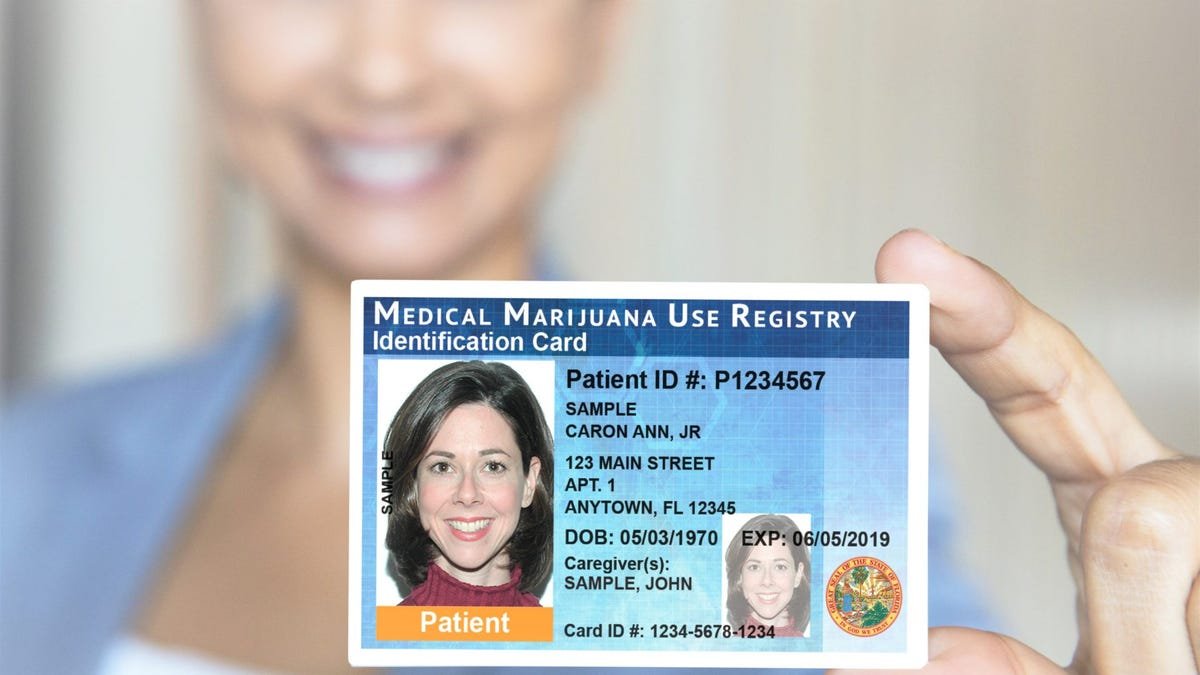
Yes, but only for residents diagnosed with a specific set of conditions who have applied for and received a Medical Marijuana ID Card or caregivers who have received a Medical Marijuana Caregiver Card.
Is recreational marijuana legal in Florida?
No. During the 2024 General Election, an amendment that called for legalizing recreational marijuana in Florida failed to get the 60% of votes needed to pass.

Is weed legal in Florida?
Pot, weed, marijuana, or cannabis. Whatever you call it, recreational marijuana has not been legalized in Florida.
Ginny Beagan, Wochit
Is medical marijuana legal in Florida?
Medical marijuana is legal here, but only for Florida residents with the following conditions who apply for and receive a Medical Marijuana Card:
- Cancer
- Epilepsy
- Glaucoma
- HIV (human immunodeficiency virus)
- AIDS (Acquired immune deficiency syndrome)
- PTSD (post-traumatic stress disorder)
- ALS (amyotrophic lateral sclerosis)
- Crohn’s disease
- Parkinson’s disease
- Multiple sclerosis
- Comparable medical conditions or status to the above
- A terminal condition
- Chronic nonmalignant pain
That list might be expanded this year.
House Bill 719, filed by Rep. Bill Partington, R-Ormond Beach, for the 2026 legislative session, would, among other things, allow medical marijuana for patients diagnosed with medical conditions treatable with Schedule II classified opioids. A companion Senate bill, SB 1032, was filed by Se. Alexis Calatayud, R-Miami.
Can I bring weed if I have a medical marijuana card from another state?
No. The state of Florida does not offer reciprocity.
Can I get busted for possessing weed in Florida?
If you are caught with pot without a valid Medical Marijuana Card (or Medical Marijuana Caregiver Card, for people assisting medical marijuana patients who are minors or who need help), marijuana advocacy group NORML lists the following penalties under Florida Statutes:
- Possessing 20 grams or less: first-degree misdemeanor, up to one year in jail and maximum $1,000 fine.
- Possession of paraphernalia: Misdemeanor, up to one year in jail and maximum $1,000 fine.
- Possessing marijuana within 1,000 feet of a school, college, park or other specified areas: Felony, mandatory three-year sentence and maximum $10,000 fine.
- Possessing from 20 grams: to 25 pounds: Felony, up to five years in jail and maximum $5,000 fine.
- Possessing from 25 to 2,000 pounds of marijuana: First-degree felony, from three to 15 years in jail and $25,000 fine.
- Possessing from 2,000 to 10,000 pounds of marijuana: First-degree felony, from seven to 30 years and $50,000 fine.
- Possessing more than 10,000 pounds of marijuana: First-degree felony, from 15 to 30 years and $200,000 fine.
However, many communities and municipalities have decriminalized possession of up to 20 grams or marijuana, meaning if you’re busted you’ll get a fine (which will go up each time) and you may be required to attend a drug education program or do community service.
Areas that have decriminalized pot include Alachua County, Broward County, Cocoa Beach, Hallandale Beach, Key West, Miami Beach, Miami-Dade County, Orlando, Osceola County, Palm Beach County, Port Richey, Sarasota, Tampa and Volusia County.
Is it legal to sell weed in Florida?
Only licensed medical marijuana dispensaries may sell marijuana in the state of Florida. Even if the proposed recreational amendment passes this year, you still will have to buy your pot at a licensed dispensary.
People charged with selling marijuana can face the following:
- 25 grams or less, without renumeration: Misdemeanor, maximum 1 year in jail, $1,000 fine.
- 20 grams to 25 pounds: Felony, maximum 5 years in jail, $5,000 fine.
- 25 to less than 2,000 pounds or 300-2,000 plants: Felony, three to 15 years, maximum $25,000 fine.
- 2,000 to less than 10,000 pounds or 2,000-10,000 plants: Felony, seven to 30 years, maximum $50,000 fine.
- 10,000 pounds or more: Felony, 15 to 30 years, maximum $200,000 fine.
- If within 1,000 feet of a school, college, park, or other specified areas: An additional 3-15 years, $10,000 fine
Are low-THC products like delta-8, delta-9, delta-10 or THC-O legal in Florida?
Assorted different types of so-called “diet weed” cannabinoids such as delta-8, delta-9, delta-10, and THC-O, which are derived from hemp and not marijuana and contain lower levels of THC, have been sort-of legal here under the 2018 federal Farm Bill that allows farmers to grow industrial hemp.
However, in November Trump signed a spending bill to reopen the federal government after a lengthy shutdown over healthcare subsidies. It also closed the Farm Bill loophole, effectively banning nearly all hemp-derived consumer products including CBD. That change has a one-year grace period before it goes into effect.
In 2024, the Florida Legislature passed a bill, SB 1698, that effectively banned delta-8 and delta-10 products and placed a 5-milligram-delta-9 concentration limit per serving but Gov. Ron DeSantis vetoed it, reportedly to protect small businesses. They’re still federally illegal.
Didn’t Trump reclassify marijuana?
Not quite. Trump ordered the Department of Justice to begin the procedure to reclassify marijuana.
It is currently classified as Schedule I drug, which are completely prohibited and described by the Drug Enforcement Administration (DEA) as having no “medical use and a high potential for abuse.” Other drugs in that classification include heroin and LSD.
Under the order, which continues a process started by former President Joe Biden, marijuana would become a Schedule III drug. The DEA describes Schedule III drugs as having “a moderate to low potential for physical and psychological dependence.” Schedule III drugs include ketamine, testosterone, some anabolic steroids or Tylenol with codeine and are potentially eligible for prescription.
The reclassification relaxes restrictions on scientific testing and could save marijuana companies a lot of money in taxes in states where it’s legal.
But it hasn’t happened yet, and when it does marijuana still would not be legal as far as the federal government is concerned. The president stressed that the order “does not legalize marijuana in any way, shape or form, and no way sanctions its use as a recreational drug.”
Can you get a DUI in Florida on marijuana?
Yes. Drivers under the influence of drugs, including marijuana, face the same penalties as drunk drivers in Florida. That ranges from up to six months of jail time, a fine between $500 and $1,000, a license suspension, 50 hours of community service and a 10-day vehicle impoundment (for the first offense) to up to five years in prison, up to $5,000 in fines, lifetime license revocation and more for the fourth offense.
Penalties go up fast if there is a minor in the vehicle or you cause property damage, injury or death.
Where can I find a marijuana dispensary near me in Florida?
According to the Jan. 2 update from the state’s Office of Medical Marijuana Use, there are currently 738 licensed dispensing locations in Florida. You can search for a center near you at knowthefactsmmj.com/mmtc/.
Please support local community journalism and stay informed about Southwest Florida news by subscribing to The News-Press and Naples Daily News; download the free News-Press or Naples Daily News app, and sign up for daily briefing email newsletter, food & dining and growth & development newsletters here and here.
