
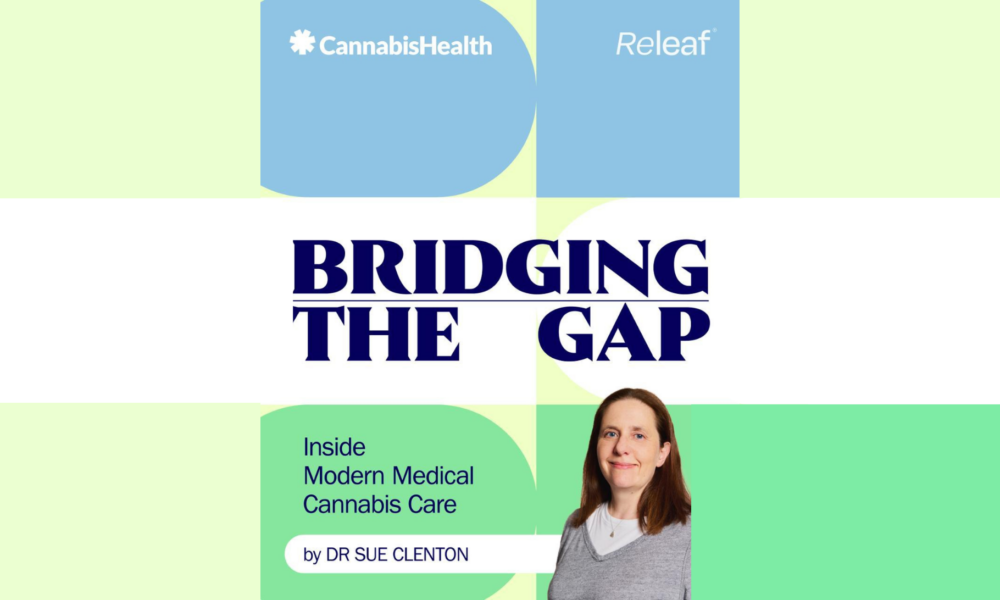
In her bi-weekly series for Cannabis Health, Dr Sue Clenton, Consultant Oncologist and Medical Director at Releaf Cannabis Clinic, shares her insight from the front line of an emerging field of medicine, taking readers inside the clinic and offering a doctor’s perspective on what it really means to prescribe cannabis medicines in the UK today.
In this latest instalment, Dr Clenton explores the evolving role of prescribers as educators and advocates of cannabis-based medicine.
In the rapidly evolving landscape of medical cannabis, clinicians are not only prescribers of cannabis-based medicines but also educators, advocates, and leaders in the field.
This shift is crucial in defining what responsible practice looks like in an area where stigma and misunderstanding are rife. At Releaf cannabis clinic, we help our prescribers navigate the complexities of this new domain and have built a governance model that supports them to lead by example.
The evolving role of the prescriber
The role of a prescriber has historically been to diagnose and treat patients based on established protocols. However, in medical cannabis, this is evolving.
Cannabis clinicians must act as advocates for their patients and for integrating cannabis into mainstream medicine. This involves educating both peers and patients about the potential benefits, as well as the risks.
The endocannabinoid system (ECS) was discovered nearly 30 years ago, when I was still training as a doctor. But it still isn’t widely taught in medical schools today. Unless a clinician is actively interested and seeks out information about medical cannabis, they’re unlikely ever to encounter this area of medicine during their training.
Inevitably, this means that those of us working in this space become educators, interpreters of science, and, quite often, the first doctors to speak to a patient meaningfully about this treatment.
The lack of knowledge – and often fear about medical cannabis in the broader medical community – also impacts patients. Without the guidance from their doctor, they may not realise that there is an alternative to opioids for chronic pain, for example, and many find out about cannabis clinics by accident.
This is where clinicians can be powerful advocates – not just promoting cannabis as a medicine but pushing for greater awareness, safety, and scientific integrity.
Clinicians as educators
But advocacy must go hand in hand with education.
When I joined Releaf two years ago, there were only four doctors. Today, there are over 40. This growth reflects a clear demand among clinicians for structured guidance and leadership in a field they haven’t been trained to navigate.
We have stepped up to fill this gap. Every doctor at Releaf receives extensive training before prescribing, but we’ve also developed our own training scheme and actively take our teaching out into the wider community. Our team has delivered everything from webinars for medical professionals and GP conferences to workplace training for employers.
Two of our doctors recently joined an online GP group that meets monthly and persuaded the organisers to let them present on medical cannabis. They’re now taking this into palliative care settings as well, where clinicians are keen to understand alternatives for patients with complex symptoms.
In an emerging field, clinical leadership can be as simple as starting conversations and offering clarity in places where there is uncertainty.
Education rooted in governance
Of course, this education should be rooted in robust governance and evidence-based practice.
At Releaf, our governance model emphasises continuous professional development and integrating real-world data into clinical practice. Evidence isn’t something we passively wait for others to collect. It’s something we actively contribute to through patient-reported outcome measures (PROMs) and partnerships with leading universities such as Johns Hopkins.
For clinicians, this builds confidence. For patients, it creates safety and trust. For the field as a whole, it lays the groundwork for medical cannabis to be integrated into mainstream healthcare.
Empathy and compassionate leadership
Empathy and compassion are essential for true clinical leadership in medical cannabis.
Patients repeatedly tell us that what mattered most in their experience was being heard and the relief that came with feeling like they had been listened to.
One Trustpilot review recently summed this up perfectly:
“If you want cheap medication and a quick fix, go elsewhere… but these are the people that will look after you the best in a complex situation.”
While governance keeps patients safe, empathy ensures they feel seen.
Embracing the challenge
Working in medical cannabis means learning, listening, advocating and educating, while grounding every decision in governance and evidence. It is not always easy, but I’d urge my clinical colleagues to embrace the challenge and responsibility that comes with it.
After all, medical cannabis prescribers have a unique opportunity to build a future where patients have access to safe, effective treatments and where stigma is replaced with understanding and compassion.
