

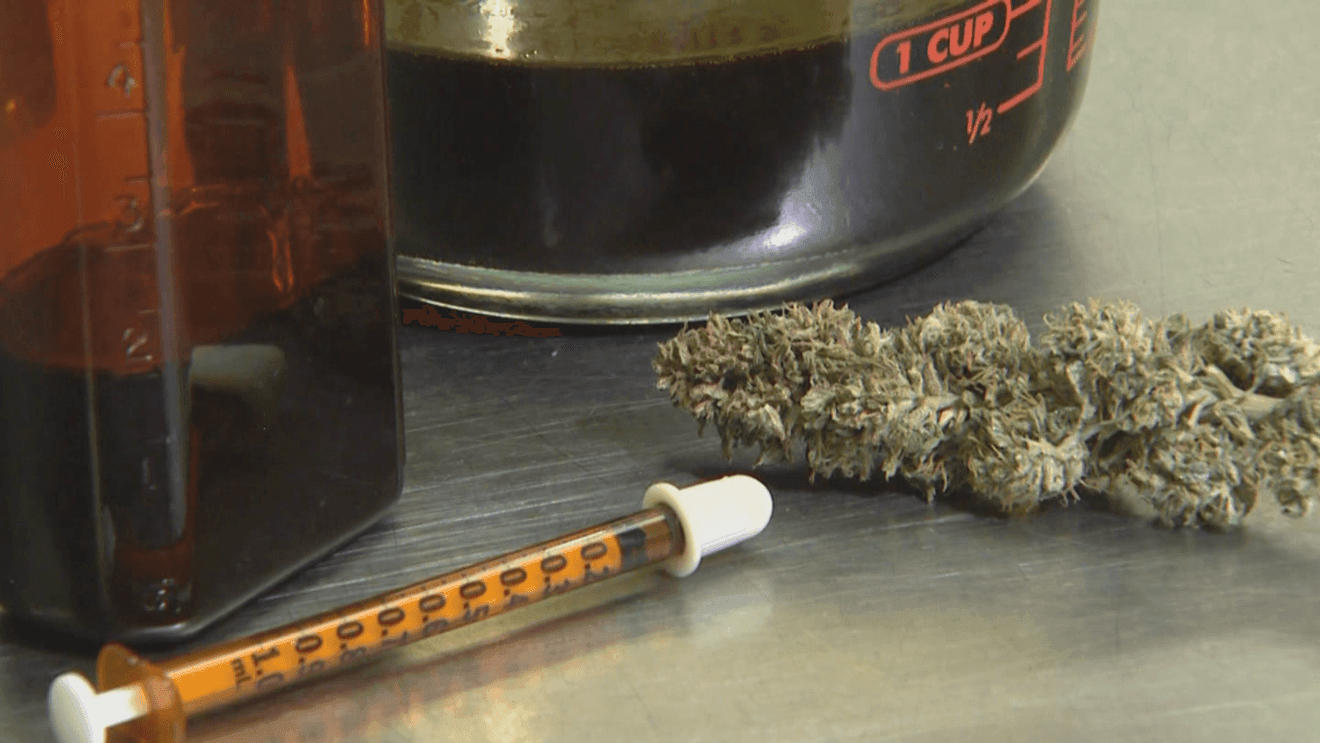
SALT LAKE CITY (KUTV) — After President Trump signed an executive order to classify cannabis as a less dangerous drug federally, 2News went to state officials to ask: how this could impact Utah’s medical cannabis program?
2News spoke with a state senator and a local medical cannabis pharmacy to find out more.
Trump’s executive order takes cannabis from a Schedule I drug—which has no medicinal use and a high potential for abuse — to a Schedule III drug — which is defined as having low to moderate potential for dependence, according to the United States Drug Enforcement Administration (DEA).
Narith Panh, the chief growth officer for medical cannabis pharmacy Dragonfly Wellness, said the change is validating for the medical cannabis industry.
“It’s a huge opportunity and moment for validation and credibility,” Panh said.
The medical cannabis industry took shape in Utah in 2018—and with the rescheduling of the drug on the horizon, 2News asked State Senator Evan Vickers (R) of Cedar City what this means for Utahns.
“The first answer right now is: we’re not sure; but there are some things that could potentially change,” Vickers said.
The senator said the first thing he thinks of is research.
Cannabis research currently has to be done in a Class I lab because of its federal designation. He said there aren’t many of them in the country, but said the University of Utah does have one.
“Moving to a Schedule III would open the door for more traditional research. So, pharma companies and … other universities, entities, research entities, could do more traditional research on a much freer scale,” Vickers said.
For reference, Vickers said you could think of Schedule III like Tylenol with codeine.
He said another thing that could change is how medicinal cannabis companies are taxed.
“Right now, cannabis companies … are hit with a very heavy federal tax to the tune of about 45%,” Vickers said. “It’s my understanding that that tax could go away and go back to a traditional business arrangement with a company just like any other business.”
Additionally, another challenge medical cannabis companies face that could be alleviated is banking.
“This should, at least, open that door to where traditional banks and everyone else could do business with a cannabis company without the fear of reprisal, you know coming back on that transaction,” Vickers said.
Panh agreed this could help the business, adding that it could have benefits for current patients.
“Patients have been paying this tax through transaction fees, through banking fees, through all these things, because we’re a ‘risky business.’ With Schedule III, we become a legitimate business just like any other gas station, any other McDonald’s, any other grocery store.”
However, the senator said this doesn’t mean cannabis products would suddenly pop up in traditional pharmacies; patients would still have to go to medical cannabis pharmacies to access them.
“Those products would still have to go through the FDA process, the research and development, and the approval process, and then become a prescription drug,” Vickers said.
Vickers said this may lead the legislature to look at expanding how many pharmacies are allowed in the state.
“Right now, we have, quite frankly, we have enough growers. You know, they’re growing product to facilitate the number of patients we have,” Vickers said, “We have pharmacies across the state; we could possibly expand that, we keep looking at that, but it really depends on demand. Even if companies wanted to jump into the program, we still have limitations on how many we allow in to the program.”
2News asked Vickers—does this pave the way to Utah possibly becoming a recreational state?
“Here again, I’m not sure how to answer that. Traditionally, Utah has not been—has been very reluctant,” he said. “The legislature has been very reluctant to go recreational. I wouldn’t be surprised to see some kind of ballot initiative—if that would pass or not, I don’t know. If I had to bet, I would say no. But who knows?”
2News also asked the senator what this could mean in terms of the criminality of cannabis in the state — he told me that’s something that will probably come up for discussion at the next legislative session.
___
