



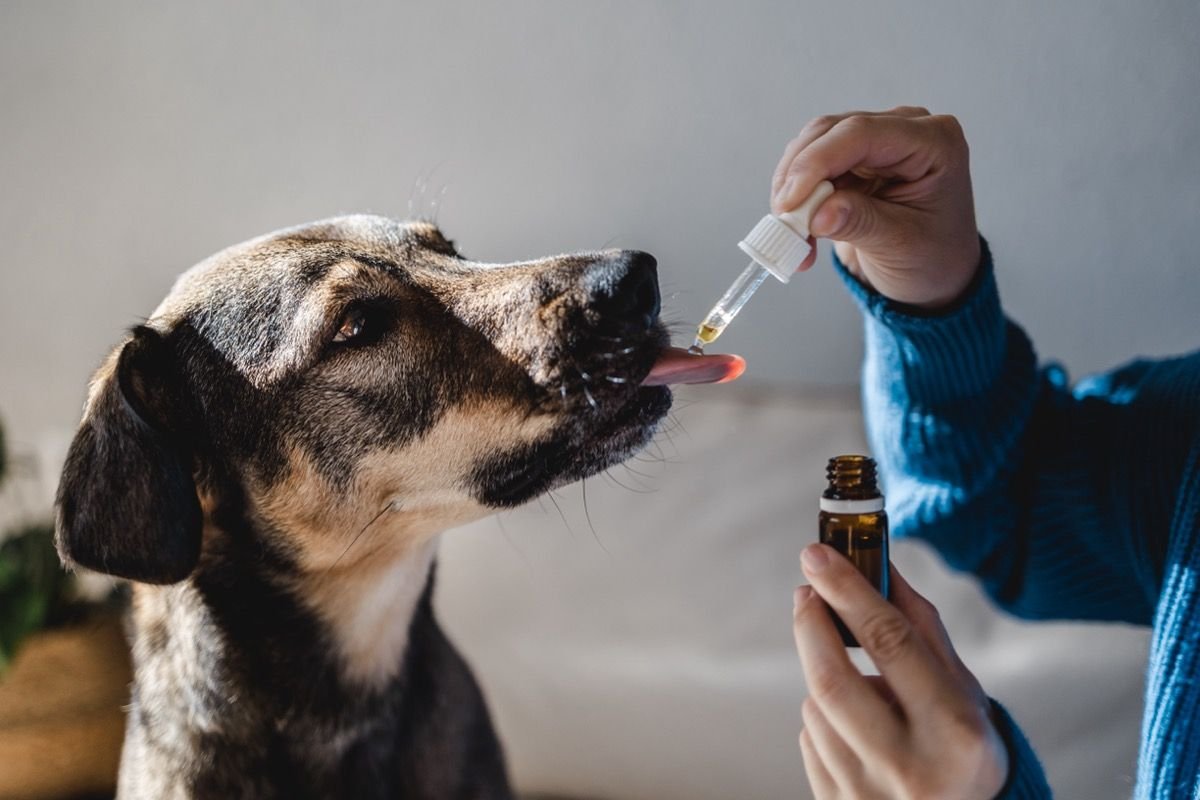
What effects do dog owners associate with cannabidiol (CBD) supplementation for their pets? Noting the rise in CBD use for dogs for health and behavior reasons, researchers in a recently published study stated the need for further investigation into the long-term effects of the cannabinoid (1). The study, “
Study Design: Data from the Dog Aging Project
The researchers analyzed owner-reported survey data from the Dog Aging Project (DAP), a community science project spanning several years, reaching 50,000 dog owners, and containing demographic data, behavior, and health over the dogs’ lifespans. The goal of DAP is to understand how genes, diet, lifestyle, and the environment influence aging and health in dogs. The total number of survey responses covered 47,355 dogs.
Dive Deeper into Cannabis and Pets
Watch our interviews with two veterinarians:
The main measurements in the study involved determining how demographic features of the dog and owner influence the decision to use CBD and hemp, cross-sectional associations between health conditions and CBD, and identifying behavioral changes associated with age with long-term hemp and CBD use.
Frequent CBD use referred to “non-prescription use” and “daily supplement” use in the Health and Life Experiences Survey (HLES) and the Annual Follow Up Surveys (AFUS). “Infrequent use” referred to less than once per day.
The researchers also compared the prevalence of CBD use in jurisdictions with and without legal access to medical cannabis.
Results: Health and Behavior Trends
The use of CBD was higher in jurisdictions with legal medical cannabis, for certain conditions, and a decline in aggression was also seen.
- 2,592 dogs (5.5% out of 47,355 dogs) had frequent or infrequent CBD use
- The average age of dogs with frequent use was 10.2 years, 8.1 for dogs with infrequent use, and 7.6 for dogs with no reported use
- 10,808 dogs lived in 12 jurisdictions where residents had no access to cannabis or had access to only CBD oil, while 34,404 dogs lived in 35 jurisdictions with legal access
- 3,470 dogs (7.3% of 47,355) were given CBD at any point, and of those dogs, 2,759 reported frequent use
- The purebred Leonberger reported the highest CBD prevalence of use, while the purebred Scottish terrier, mixed black and tan coonhound, and mixed standard schnauzer reported no CBD use
- Dementia was the condition with the highest prevalence of CBD use (18.2%), while osteoarthritis and cancer were the health conditions with the highest number of CBD given to dogs (10.0% and 12.5% respectively)
Limitations to the Study
The study lacks quantifiable data, relying on owner-reported responses on health conditions and CBD use, the researchers noted. Additionally, as the study is observational, no causal effects can be inferred from the results. The owners represented in the DAP also tended to be wealthier and older, limiting the generalizability of the results. Information on cannabinoid dosages, administration, and product sources were also not included, making insight into an optimal and healthy CBD dose not possible.
Trends in CBD Use and Research
As the trend towards more access to CBD supplements continues, the importance of research for CBD and pets increases, the researchers explained. The use of CBD seemed to reflect the broader societal beliefs in CBD and cannabis, they stated. They also noted the potential use of CBD in dog training, due to the decline seen in intensity of aggressive behaviors.
“Further studies are needed to advance our understanding of this novel supplement at the mechanistic, clinical, and population levels,” they concluded. “This will benefit the health of humans and dogs alike.”
Reference
- Conrow, KD.; Haney, RS.; Malek-Ahmadi, MH.; Albright, JD.; Kaplan, BLF.; Snyder-Mackler, N.; Kerr, KF.; Su, Y.; Promislow, DEL.; Bray, EE.; Dog Aging Project Consortium; Leung, MCK. Demographic features, health status, and behavioral changes associated with cannabidiol use in the Dog Aging Project. Front. Vet. Sci. 2025. 12. DOI:
10.3389/fvets.2025.1666663
