



Medical and recreational marijuana remains illegal in Tennessee. Simple posession remains punishable with up to a year in prison and a fine of up to $2,500.

Trump signs EO easing federal marijuana restrictions
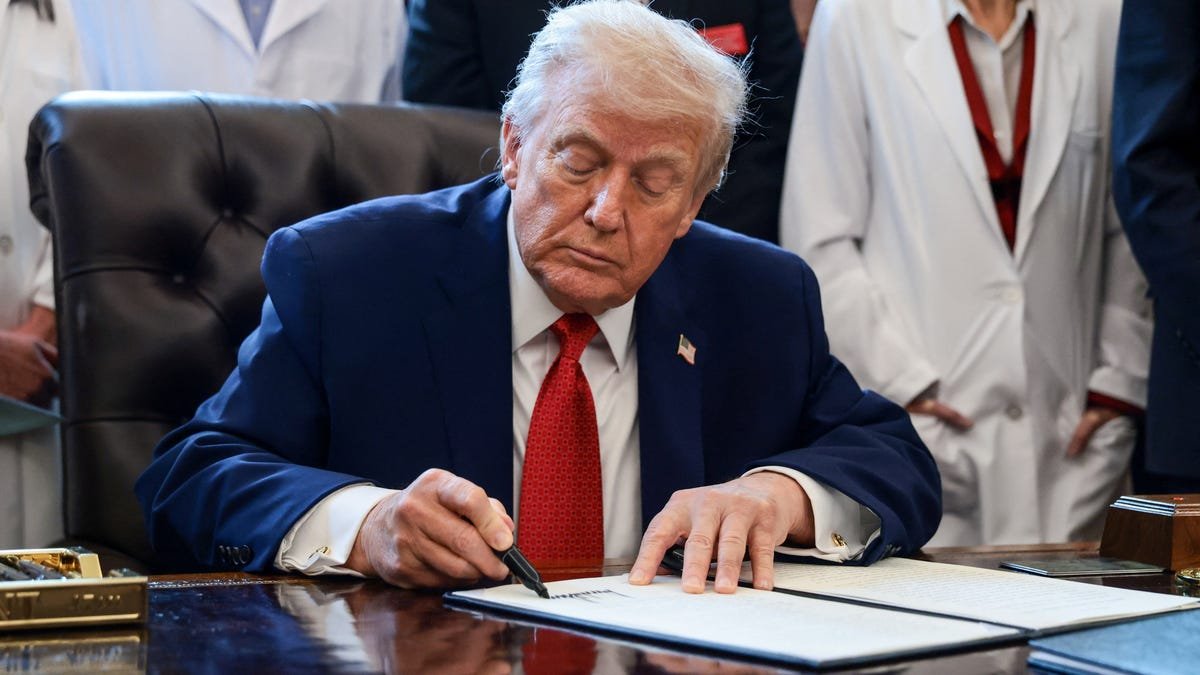
President Donald Trump signed an executive order easing federal marijuana restrictions.
Tennessee is one of 10 states where marijuana remains illegal for both medical and recreational purposes after President Donald Trump signed an executive order expediting the reclassification of marijuana as a less dangerous drug and recognizing its medical benefits.
Reclassification by the Drug Enforcement Administration moves marijuana out of the Schedule I category with heroin and LSD and into Schedule III, alongside drugs like ketamine.
The change does allow new medical research. It does not make marijuana legal for medical or recreational use nationwide.
“This reclassification order will make it far easier to conduct marijuana-related medical research, allowing us to study benefits, potential dangers and future treatments,” Trump said in the Oval Office on Dec. 18. “It’s going to have a tremendously positive impact.”
“I’ve never been inundated by so many people as I have about this particular reclassification,” Trump said.
Tennessee has not legalized marijuana for medical use and also has no “trigger” law permitting medical use in the case of federal rescheduling.
Simple posession of half an ounce of marijuana is punishable in Tennessee by up to one year in prison and a fine of up to $2,500.
House Speaker Cameron Sexton, R-Crossville, told The Tennessean that the move is a “first step.”
“There will have to be conversations about who manufactures it, who tests it, who distributes, which medical illness could it be used for, does this require FDA approval and a host of other questions,” Sexton said.
Lawmakers created the Tennessee Medical Cannabis Commission in 2021 to study and make recommendations for a legalization process, including a framework for what illnesses the drug could be used for. The commission produced a 105-page report in January.
House Majority Leader William Lamberth, R-Portland, who has led regulation efforts on hemp and canibinoid products, said lawmakers will consider Trump’s action when they return to the state Capitol.
“Any change in the federal drug schedule that acknowledges legitimate medical use based on scientific evidence will certainly be taken into consideration as we strive to form an appropriate legal framework for dangerous substances,” Lamberth said.
“Tennessee will continue to strictly regulate intoxicating substances to protect public health and safety, especially vulnerable populations,” Lamberth said.
Both Republicans and Democrats have made proposals to legalize limited ammounts of cannabis for medical use with a physician’s prescription, but so far no viable program exists in Tennessee.
When asked, Republican leadership has regularly referred to federal scheduling as a barrier to state legalization.
Lawmakers return on Jan. 13.
Vivian Jones covers state government and politics for The Tennessean. Reach her at vjones@tennessean.com.
