



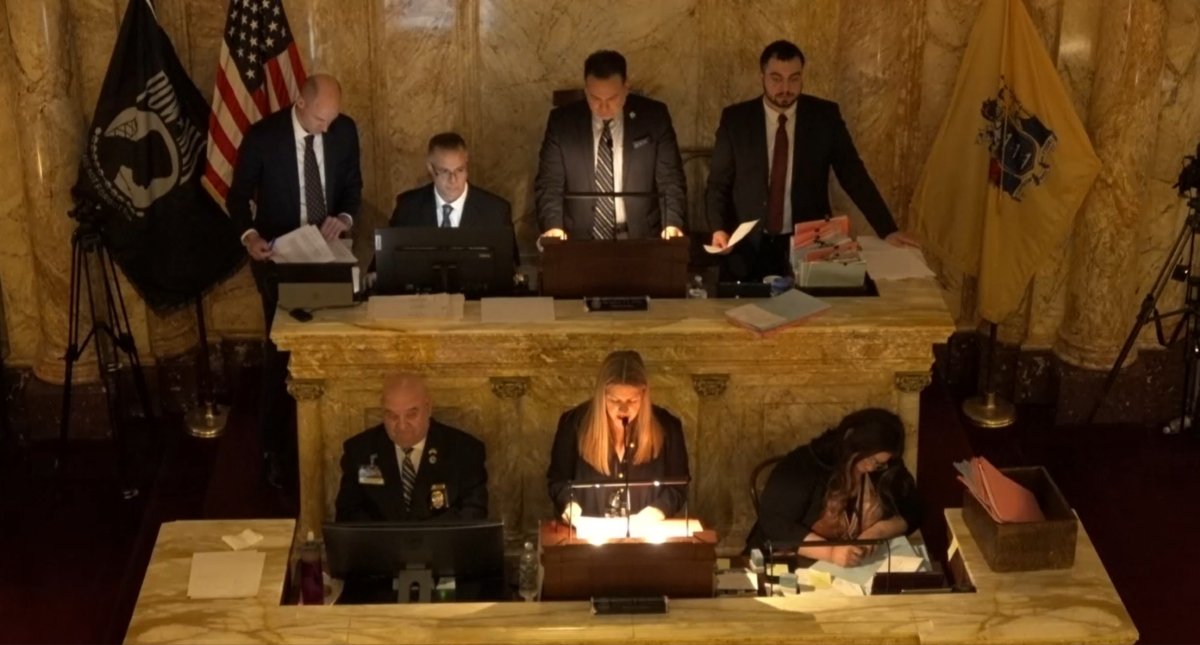
The anti-underground legacy operator and NJ Cannabis Regulatory Commission (CRC) reform bill passed both the NJ Senate and Assembly.

The bill was nearly rammed through the lame duck session between the November election and the new legislature being sworn in. It passed some legislative committees last week.
In stark contrast, bipartisan medical homegrow legalization legislation has not even been permitted an informational show hearing.
Anti-Legacy Operator Crackdown
“The bill requires the New Jersey State Police (NJSP) to develop and implement an enforcement program to identify, investigate, and initiate enforcement actions against unlicensed businesses selling cannabis or cannabis items,” it says.

“The NJSP or a local law enforcement agency is permitted to take steps to close such businesses, seize any cannabis sold by the unlicensed business, and refer the matter for criminal prosecution.”
“An unlicensed business may be deemed a public nuisance subject to abatement under State and municipal law,” they added.
So far, the towns have been taking the initiative against local offenders. They have only brought the State Police in a few times.
Ownership Changes
This says you can have three dispensaries with your flagship and two “satellites” with one dispensary license. So more dispensary chains might open.

The bill also requires changes in ownership interest to a minority-owned, women-owned, or disabled-veteran-owned business be re-certified with the State if it is still minority or women owned.
Furthermore, it specifies that a familial relationship with a license holder, other than the spouse, domestic partner, or civil union partner, and a dependent child or stepchild, doesn’t affect the prohibition against a license holder holding more than one license of each class.
CRC Changes
The bill also diminishes the Governor’s control over the NJ-CRC since the Chair will now be chosen by election. Also, “the chair shall not have direct supervisory powers over the remaining members of the commission.”
In addition, the bill allows the Commissioners to hold more meetings with members of the public. But there can’t be too many Commissioners there, or it has to be an official meeting.
Grassroots advocates are likely unhappy that this could allow more favoritism and corruption. But many local minority and women license applicants have wanted to discuss the process with Commissioners for a while.
Commissioner Changes
Also, the bill allows a former Aide of NJ Senate President Nick Scutari (D-22-Union) and the current Mayor of Springfield, Harris Laufer, to be a NJ-CRC Commissioner after some delays and controversy.
There have been questions about the ethics of allowing an elected official to become a Commissioner. So, the law was changed to allow it.
The bill says a “member who holds local elected office shall be permitted to campaign for local elected office in the same year as the election for such office, and shall be permitted to fundraise for that campaign.”
To avoid some issues, “a person with any ownership interest in a cannabis business shall not be permitted to donate to the campaign of a person seeking local elected office if such person is also a member of the commission.”
Also, “a member of the commission who is seeking to concurrently hold local elected office shall not accept any campaign donations from any person with an ownership interest in a cannabis business.”
It remains to be seen what will happen with Laufer. In a speech during his nomination process last year before the Judiciary Committee, he pledged to value social equity and an efficient process.
The NJ-CRC, which initially had two Hispanic Commissioners, has had none for more than a year now.
Cannabiz for the Connected
“The bill permits immediate family members of any State officer, employee, or a person … to represent, appear for, or negotiate on behalf of any holder of or applicant for a medical or adult-use cannabis business,” it says.
People with ties like that could help the broader cannabis legalization movement. On issues like homegrow, for example, more connected advocates are needed. However, the same people could also probably get away with a lot of shady things in classic Jersey fashion.
The bill says “a special State officer or employee without responsibility for matters affecting medical or personal use cannabis activity, an immediate family member of the person, who is associated with certain partnerships, firms, or corporations that represent, appear for, or negotiate on behalf of cannabis businesses must wait two years after leaving office or employment prior to personally participating in any such representation, appearance, or negotiation.”
It also says they want the NJ Department of Labor to figure out if some people are too high to work blue-collar jobs.
The Senate version S 4847 was sponsored by Scutari. The Assembly version A6267 was sponsored by Assembly Deputy Majority Leader Reginald W. Atkins (D-20-Union).
NJ Cannabis Market Issues
Many independent dispensaries have been struggling to compete against shady convenience stores, gas stations, and smoke shops selling weed.
There certainly are a lot of opportunists making money on weed in Jersey who never faced the unjust consequences of being caught with a natural medicine. It’s also likely that many of them have not helped advance the legalization movement.
Furthermore, Heady NJ has even heard rumors of towns being against dispensaries because convenience stores have told City Council members they do not like the weed competition.
In addition, some ethical underground legacy operators provide quality, affordable cannabis flower and a range of products to price-conscious consumers.
Smoke shops seemed to have been allowed to be more colorful than most dispensaries. They also sell a greater range of products without imposing the cost of red tape. Heady NJ has seen several smoke shops selling intoxicating hemp in anti-dispensary towns like Union City in Hudson County and East Brunswick in Middlesex County.
However, that legal competition from legal smoke shops selling intoxicating hemp will end when the phased-in ban takes effect before 4/20/2026. In addition, liquor stores cannot legally sell hemp drinks by Thanksgiving 2026.
