


Cannabis extraction is often framed as a debate, but in reality it is a discussion of applied science. Solventless hash rosin and hydrocarbon extraction, commonly referred to as BHO, are not opposing ideologies—they are distinct technical approaches designed to separate cannabinoids and terpenes from the cannabis plant. At Prohibition 37 (P37) and Terp Intel, we focus on education rooted in chemistry, agriculture, and transparency, not hype or tribalism. Understanding the differences between extraction methods allows consumers and professionals alike to better appreciate why cannabis concentrates vary in flavor, texture, and expression.

At its most basic level, extraction is the process of separation. The majority of cannabinoids and terpenes are stored inside trichome heads, the resin-filled glands that coat cannabis flowers. Each extraction method is simply a different strategy for isolating those compounds. Solventless hash rosin relies on mechanical forces such as ice, water, heat, and pressure, while BHO extraction relies on chemical affinity using hydrocarbons like butane or propane in closed-loop systems. Both methods are legitimate, technical, and highly dependent on skill.
Solventless hash rosin begins with cultivation and harvest decisions rather than laboratory manipulation. Cannabis intended for solventless extraction is typically fresh-frozen immediately after harvest to preserve volatile terpenes and prevent oxidation. The frozen material is washed in ice water to gently separate trichome heads from plant matter. These trichomes are filtered through micron screens, collected as hash, and then pressed using carefully controlled heat and pressure to produce rosin. Because no chemical solvents are used, solventless extraction preserves the plant’s original resin structure, making the quality of the starting material critically important.
The idea that solventless extraction is “simple” is a misconception. While the inputs are minimal, the process is unforgiving. Poor genetics, weak trichome heads, or improper cultivation cannot be corrected during extraction. Solventless hash rosin is a direct reflection of agricultural quality and post-harvest handling. What enters the process defines what exits it, making solventless products highly cultivar-dependent and expressive of their origin.
BHO extraction takes a different scientific approach. In hydrocarbon extraction, solvents such as butane or propane are passed through cannabis material to dissolve cannabinoids and terpenes. The solvent is then removed through controlled evaporation and recovery, leaving behind a concentrated extract. Modern BHO labs are highly regulated, equipment-intensive environments that rely on precision chemistry, pressure control, and temperature management. This method allows for higher efficiency, greater scalability, and consistent production across large volumes.
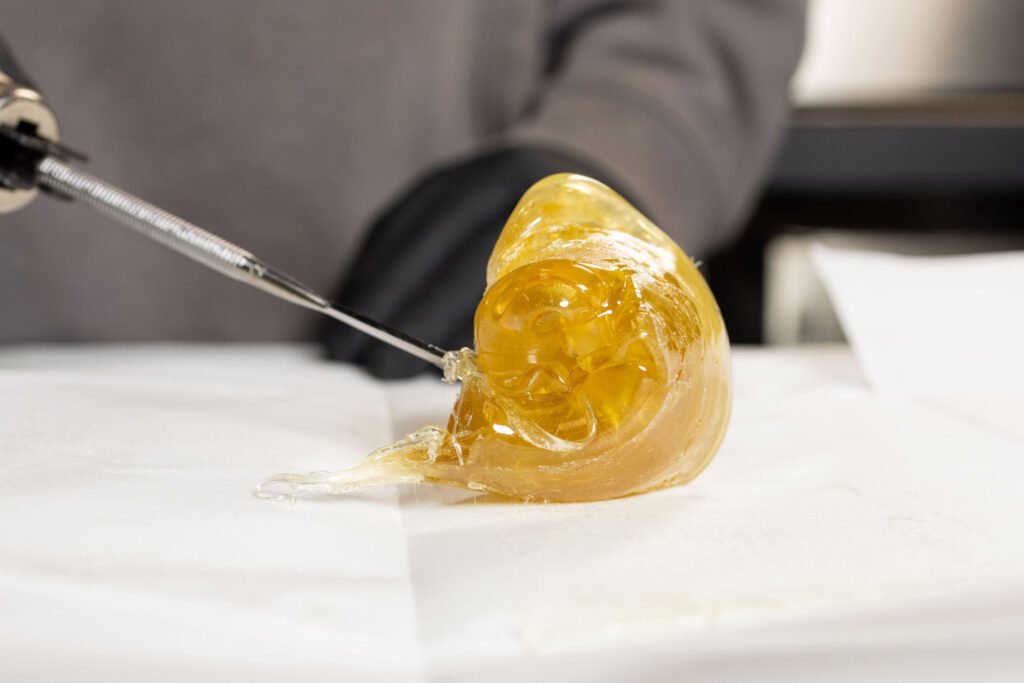
A common myth within cannabis culture is that solventless hash rosin is inherently superior to BHO, or that BHO extraction is somehow less refined. In reality, each method prioritizes different outcomes. Solventless extraction emphasizes preservation of natural trichome structure and cultivar expression, while BHO extraction emphasizes efficiency, repeatability, and chemical precision. Neither method is universally better; they are optimized for different goals within cannabis processing.
Terpene expression highlights why extraction methods matter. Terpenes vary in volatility and stability, meaning some are better preserved through mechanical separation, while others are more effectively captured through solvent-based extraction. As a result, the same cannabis cultivar can present noticeably different aroma and flavor profiles depending on whether it is processed as solventless hash rosin or as a BHO concentrate. These differences are not flaws—they are reflections of chemistry interacting with technique.
Solventless extraction also has deep historical roots. Long before modern cannabis laboratories existed, cultures around the world produced hash through mechanical methods such as hand-rubbing and dry sifting. Today’s solventless hash rosin builds on these ancestral techniques by applying contemporary scientific controls, allowing for consistency and refinement without abandoning traditional principles.
For P37 and Terp Intel, the most important takeaway is transparency. Cannabis consumers deserve clear information about how products are made and why those methods matter. Rather than framing solventless hash rosin and BHO as opposing camps, it is more accurate—and more educational—to view them as complementary tools within modern cannabis science.
Solventless hash rosin is not about purity marketing, and BHO extraction is not about shortcuts. They are two scientifically valid approaches to cannabis extraction, each revealing different aspects of the plant’s chemistry. Understanding those distinctions empowers better conversations, better education, and a more informed cannabis culture.
