
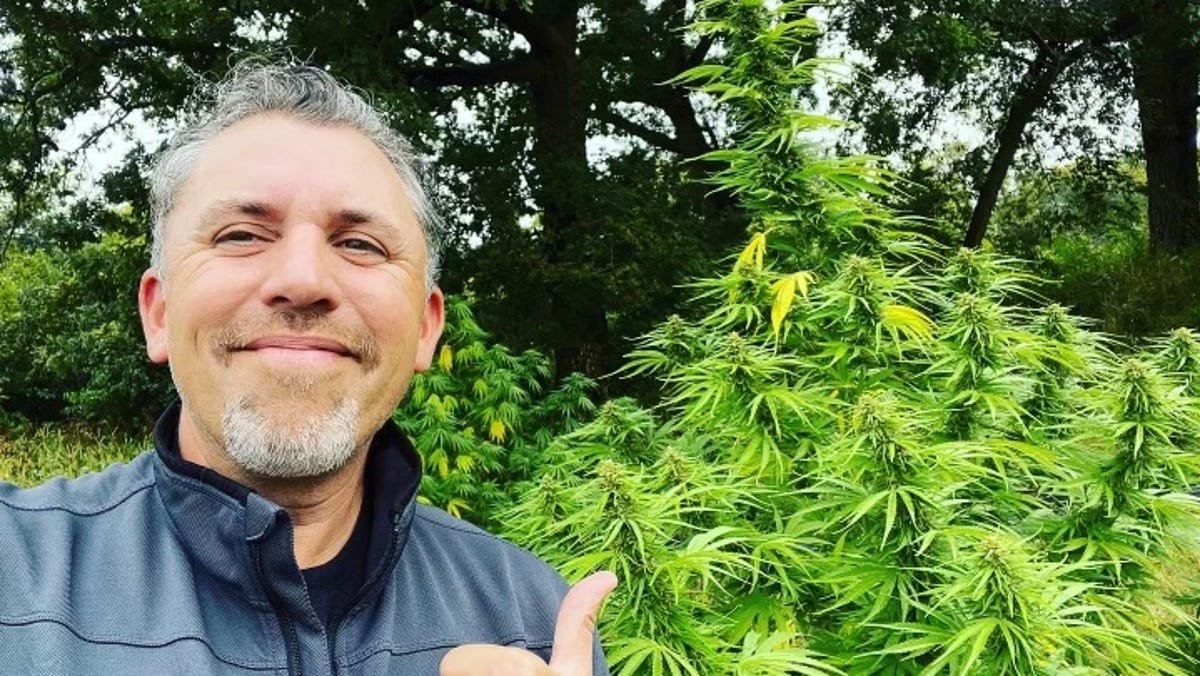
While a new federal law banning most THC products could force hundreds of dispensaries and cannabis bars in Wisconsin to close, tribal business advocates don’t think it will affect tribal ventures into cannabis.
Rob Pero, who founded the Wisconsin-based Indigenous Cannabis Industry Association in 2022, said his organization continues to grow as tribes launch new cannabis ventures despite the new federal law. He said more than 100 tribal nations across the U.S. are now engaged in some kind of cannabis or hemp business venture.
“I don’t see it slowing down because tribes are not as restricted by state or federal law,” Pero said.
He said tribal nations that develop their own laws regarding hemp and THC will be in a better position when the federal ban goes into effect.
“Tribes can regulate themselves within their own reservations,” Pero said.
But as for the rest of the cannabis industry outside reservations, he said the implications of the federal ban will be felt.
President Donald Trump signed the law banning THC from hemp on Nov. 12, closing a loophole in the 2018 Farm Bill that had legalized the sale of hemp with a limited amount of the intoxicating agent.
“It’s not the end of the world, but it will be the end of a few businesses,” Pero said.
The ban doesn’t go into effect for about a year, so Pero is hoping changes can be made to the law before that happens.
“Hopefully, common sense voices will be heard,” he said. “There will have to be a compromise.”
Still, some legal experts question the logic of tribal nations venturing into the industry at this time.
Matthew Fletcher, professor of law at the University of Michigan who specializes in tribal law, doubts tribal nations can have much success in the cannabis industry without a change in federal law.
“The only way to do that would be on tribal trust land/Indian Country land, and since federal law still bans cannabis, no, there’s no way,” Fletcher said. “That doesn’t mean tribes won’t do it, but they are at the complete mercy of the whims of the federal government’s decision to prosecute or not. It’s no way to do business. Same is true even if the state makes it legal.”
Still, the federal government has not yet stepped in to enforce its THC ban in states or tribal reservations that have made it legal. Nearly half the states in the country have legalized recreational marijuana.
Cannabis is illegal in Wisconsin for both recreational and medical use. But it is unclear whether cannabis can be legalized on reservations where state or local law does not apply. Federal law, which lists cannabis as a prohibited drug, does apply on reservations, but its use and sale is allowed on many tribal lands throughout the U.S.
In his 2023 State of the Tribes Address to the Wisconsin Legislature, Mole Lake Ojibwe Chairman Robert Van Zile urged lawmakers to legalize cannabis in the state.
He told the Green Bay Press-Gazette that the Hannahville Potawatomi Tribe, about 100 miles east of Mole Lake in Michigan’s Upper Peninsula, earns about 90% of its $5 million annual cannabis business from Wisconsin residents.
Van Zile said Wisconsin is losing tens of millions dollars to surrounding states where cannabis is legal – Illinois, Michigan and Minnesota.
Federally recognized tribes in Wisconsin that have joined Pero’s Indigenous Cannabis Industry Association include Sokaogon Mole Lake, Lac du Flambeau and St. Croix Ojibwe, as well as the Ho-Chunk Naton. The Ho-Chunk Nation decriminalized cannabis in 2024.
The Bad River Ojibwe Tribe also recently sought legal advice for possibly pursuing a cannabis business on its reservation in far northern Wisconsin.
And the Red Cliff Ojibwe Tribe near Bad River announced this month that it will soon have CBD and hemp vending machines available at its Legendary Water Resort and Casino.
Frank Vaisvilas is a former Report for America corps member who covers Native American issues in Wisconsin based at the Milwaukee Journal Sentinel. Contact him at fvaisvilas@usatodayco.com or 815-260-2262. Follow him on X at @vaisvilas_frank.
