



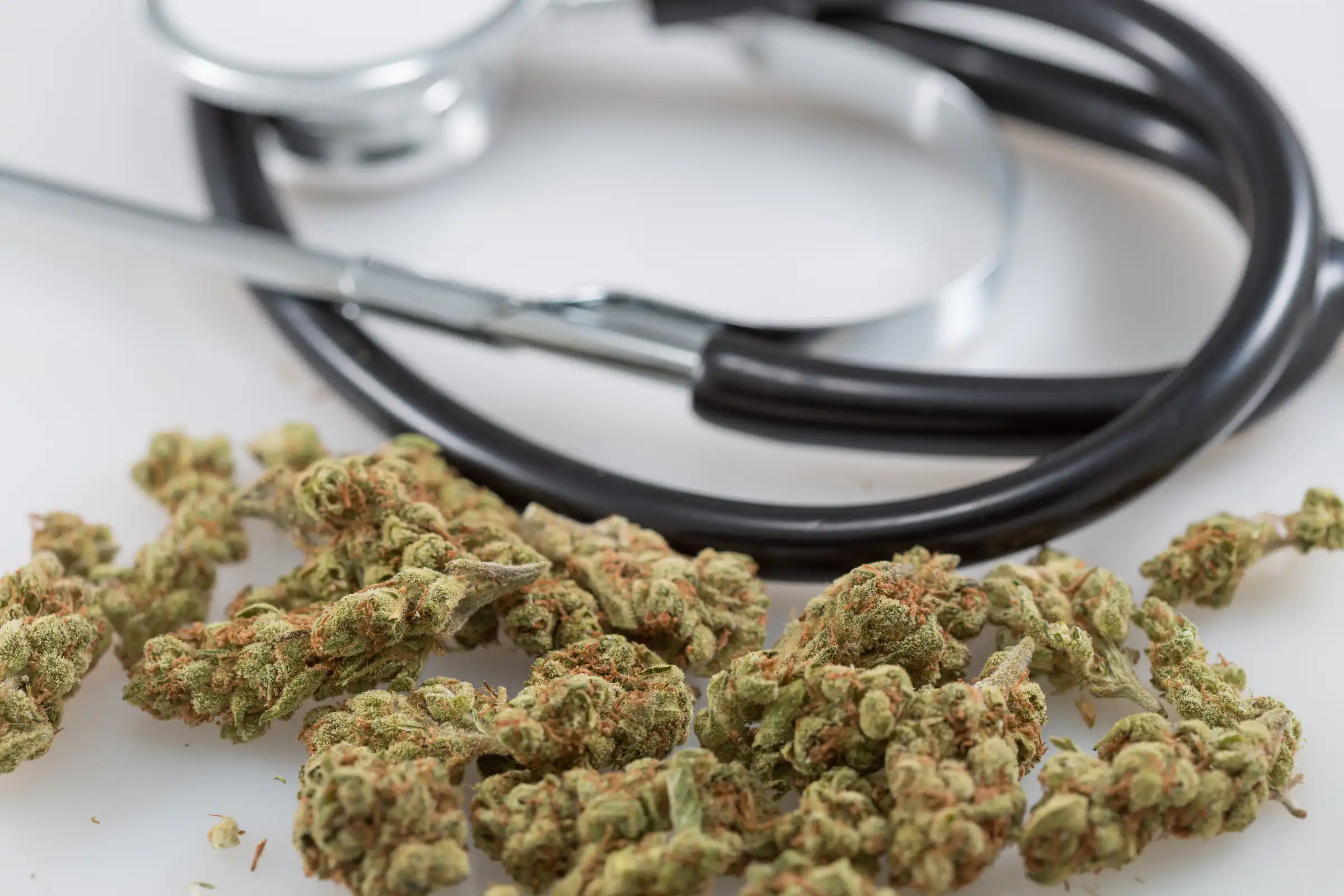
The American Medical Association (AMA) is urging federal officials to uphold “known and widely accepted scientific and clinical standards for testing safety and efficacy” of botanical drug products—including cannabis, kratom and other plant-derived substances—warning that political and commercial interests should not circumvent the standard approval process.
It also says a “special schedule” should be developed to support research on marijuana’s “potential medical utility.”
The physicians’ group sent a letter to the Food and Drug Administration (FDA) last week, arguing that “social and economic concerns and disputes should not be permitted to play a part” in the agency’s decision-making process on regulations for botanical drugs.
“The AMA believes that political considerations or conflicts of interest should not be allowed to overrule scientific evidence in making policy decisions,” the letter to Grace R. Graham, FDA’s deputy commissioner for policy, legislation and international affairs, said. “These principles are particularly important in light of the growing use and public health harms related to a wide range of botanicals, including kratom, cannabis, kava, kanna, and other botanicals that are increasingly used by consumers for specious health claims made by their manufacturers or influencers.”
AMA said in the letter, which was sent in response to a request for information about botanical drug products that FDA launched in September, that it was “pleased” to see recent moves by federal agencies to use emergency powers to schedule kratom-related compounds.
When it comes to marijuana, AMA said it supports “adequate and well-controlled studies” of cannabinoids “in patients who have serious conditions for which preclinical, anecdotal, or animal model evidence suggests possible efficacy and the application of such results to the understanding and treatment of disease.”
While the doctors’ organization said in the letter that “cannabis is a dangerous drug and as such is a serious public health concern,” it also believes “there is a clear role for the National Institutes of Health (NIH), the DEA, and the FDA to develop a special schedule and implement administrative procedures to facilitate grant applications and the conduct of well-designed clinical research involving cannabis and its potential medical utility.”
In particular, the letter said AMA supports:
- Disseminating specific information for researchers on the development of safeguards for cannabis clinical research protocols and the development of a model informed consent form for institutional review board evaluation;
- Sufficient funding to support such clinical research and access for qualified investigators to adequate supplies of cannabis for clinical research purposes; and
- Confirming that cannabis of various and consistent strengths and/or placebo will be supplied by the National Institute on Drug Abuse to investigators registered with the DEA who are conducting bona fide clinical research studies that receive FDA approval, regardless of whether or not the NIH is the primary source of grant support.
“The FDA approval process for drugs containing cannabis or other botanicals should not be short-circuited or circumvented merely because of anecdotal support or growing public use,” AMA cautioned. “Manufacturers increasingly tout their products as ‘botanical’ while—as the DEA emergency scheduling action demonstrates—their products are incredibly dangerous, synthesized drugs that pose imminent public health threats to consumers.”
“While the AMA supports innovation in drug design and development, we also urge extreme caution about deviating from known and widely accepted scientific and clinical standards for testing safety and efficacy. In a time where social influencers, rogue telehealth companies, and ‘botanical health’ companies ply consumers with promises of cures from ‘natural’ products, the AMA urges FDA to continue to rely on time-tested quality and research standards that have protected American consumers for decades. The lack of standardization by manufacturers for consumer products has resulted in a dangerous, buyer-beware marketplace. Whether it is a product containing kratom, cannabis, or other botanicals, the AMA strongly recommends that the substance—and its derivatives—be regulated by the FDA, and that its safety and efficacy be determined through clinical trials before it can be marketed or prescribed as treatment for any condition.”
AMA President Willie Underwood III said in a press release about the letter to FDA that “as botanical manufacturers develop increasingly potent products in everything from gummies and powders to oils and injections, consumers are becoming the real-world guinea pigs—and suffering tragic consequences, including dependence, substance use disorders, overdose, and death.”
“Calling something ‘natural’ doesn’t make it safe,” he said. “We need science, not social media hype, to determine what belongs in our medicine cabinets.”
Earlier this year, the AMA’ House of Delegates adopted two marijuana-related resolutions—one that advocates for a ban on flavored cannabis vaping products and another that recognizes the risks and potential therapeutic benefits of use among older adults.
Those measures were the latest in a line of drug policy-related resolutions the body has advanced in recent years that oppose commercial marijuana legalization while backing expungement of cannabis records and supporting broad drug decriminalization, among stances on other issues.
In 2024, for example, AMA delegates adopted a resolution endorsing broad drug decriminalization.
The group’s delegates in 2022 voted to amend its policy position on marijuana—which continues to oppose legalization—to support the expungement of past cannabis convictions in states that have legalized the plant.
In 2023, AMA members adopted resolutions advocating for psychedelics research, opposing the criminalization of kratom, calling for an end to the sentencing disparity between crack and powder cocaine and supporting the continued inclusion of marijuana metabolites in employment-based drug tests.
