



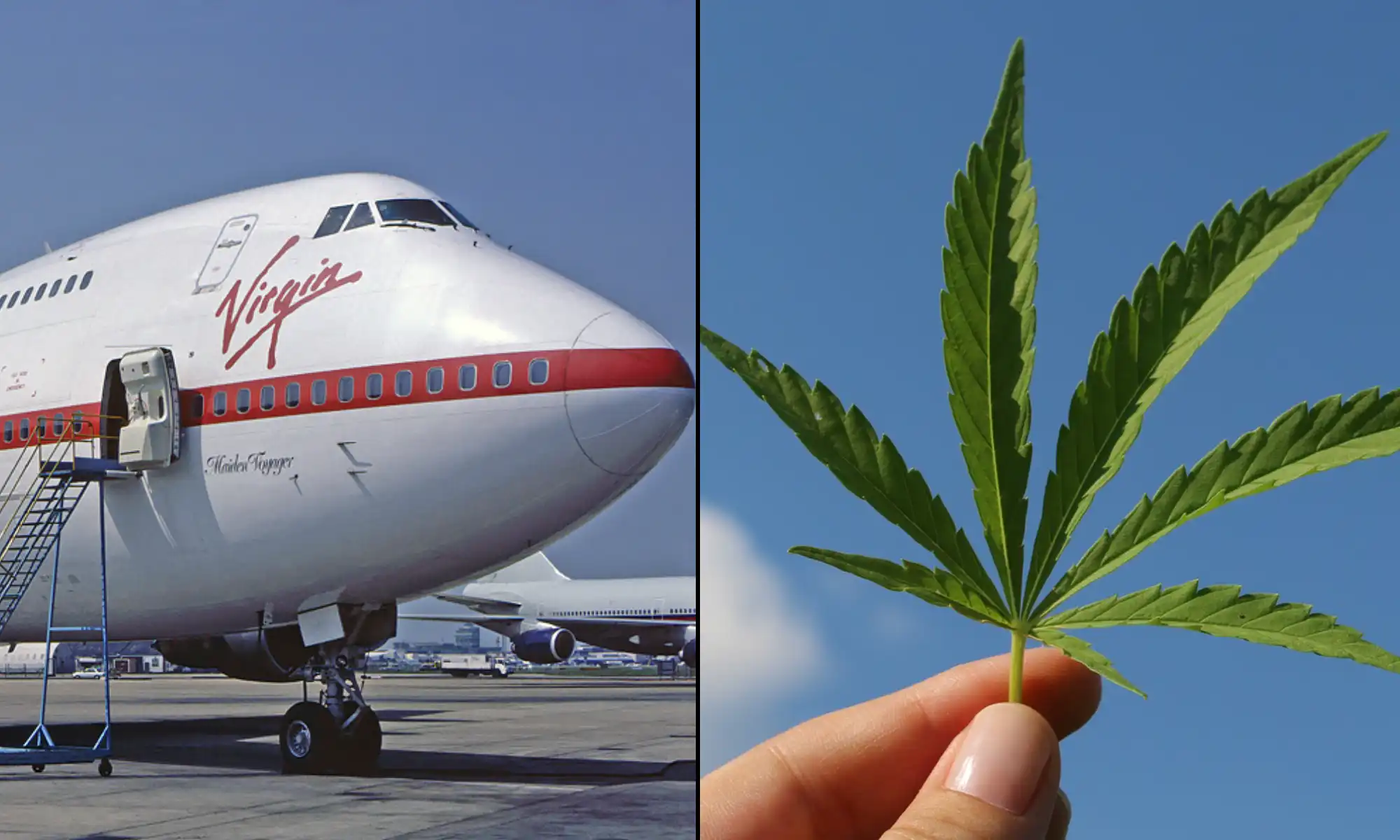
The Federal Aviation Administration (FAA) is moving to develop new marijuana-related standards for pilots and air traffic controllers in light of the “operational risk” created by the Trump administration’s move to reschedule cannabis—which has furthered the “normalization” of the drug.
FAA’s Office of Aerospace Medicine is partnering with the National Academies of Sciences, Engineering, and Medicine (NASEM) to convene a series of meetings focused on the impact of marijuana consumption on air travel professionals, an effort aimed at informing approaches the agency might take to “evaluate, update, or refine their current policies for cannabis use, particularly for determining when individuals are fit for duty.”
Topics to be discussed during the four planned meetings set to take place this year and next year—which will not be open to the public—include drug testing, cognitive functioning monitoring and the length of impairment following cannabis use. Invited participants will include experts on impairment evidence, pharmacokinetics and detectability, operational risk translation and policy framing.
There is an “urgent need to establish clear, scientifically defensible, and operationally actionable fitness-for-duty standards for pilots and air traffic control specialists (ATCS) in the context of evolving federal cannabis policy,” NASEM said in a overview of the effort, which FAA is supporting with just over $200,000.
Under an order issued by U.S. Acting Attorney General Todd Blanche in April, marijuana products regulated by a state medical cannabis license immediately moved from Schedule I of the Controlled Substances Act (CSA) to Schedule III, as did any marijuana products that are approved by the Food and Drug Administration (FDA). An administrative hearing is considering broader marijuana rescheduling, including of recreational products.
While Department of Transportation (DOT) drug testing and FAA medical certification standards remain unchanged for now, the notice of the upcoming meetings says that the “dual-status regulatory environment” under the scheduling reform has created a policy “misalignment” that poses “significant operational risk”—including by “increasing the likelihood and normalization of cannabis use,” “complicating disclosure and compliance” and “leaving the FAA without validated criteria to determine when individuals are no longer impaired.”
“The central policy question is: Following cannabis use, what elapsed time ensures both (1) absence of operational impairment and (2) compliance with DOT drug testing requirements?” NASEM’s Transportation Research Board said in the posting which was noted earlier by Cannabis Wire.
“Due to the urgency of near-term policy decisions and the inability to conduct new primary research in the required timeframe, the FAA requires structured, policy-relevant interpretation of existing scientific evidence,” the notice said, specifying that the meetings will take place over a span of about 12 months, which will enable FAA to develop and implement new cannabis policies within 12–18 months.
NASEM previously did work on state marijuana legalization law’ impact on airports on behalf of FAA, publishing a briefing on the issue and holding an event.
Meanwhile, the Transportation Security Administration (TSA) recently clarified that its “policy on medical marijuana has not changed”—despite numerous news organizations running exaggerated headlines about a supposed change in the federal government’s policy on bringing marijuana into airports and on airplanes.
DOT, which houses FAA, clarified in May that truck drivers, airline pilots and other federally regulated safety-sensitive workers still cannot use medical marijuana without being punished despite the federal rescheduling move.
Last month, a coalition of transportation and safety organizations sent a letter to federal officials saying they have “serious safety concerns” surrounding the Trump administration’s move to federally reschedule marijuana— asking them to take steps to ensure that safety-sensitive workers will continue to be tested for cannabis.
Earlier this month, the House Appropriations Committee adopted a provision directing federal officials to continue requiring government employees and safety-sensitive workers such as truck drivers and airline pilots to be drug tested for marijuana, “regardless of any future changes to the legal status or scheduling.”
The followed a press conference organized by prohibitionist groups and a drug testing industry association where two Republican lawmakers joined their call for a “carve-out” to marijuana rescheduling by affirming that safety-sensitive transportation workers could still be penalized for testing positive for THC.
The lawmakers and prohibitionist activists argued that moving marijuana to Schedule III would mean a 1986 executive order on the federal workforce that President Ronald Reagan signed defining illegal drugs as Schedule I and II drugs under the Controlled Substances Act (CSA) would be effectively nullified when it comes to cannabis use by truck drivers, airline pilots and other workers regulated by DOT.
Last October, Transportation Secretary Sean Duffy suggested President Donald Trump was “getting pressure” to reschedule cannabis—arguing that marijuana is “really addictive” and saying that policy reform around the issue sends a “dangerous” message.
“At a time when culture is pushing and celebrating the use of marijuana, we’re not talking about the risk,” Duffy said.
Image element courtesy of Steve Fitzgerald.
